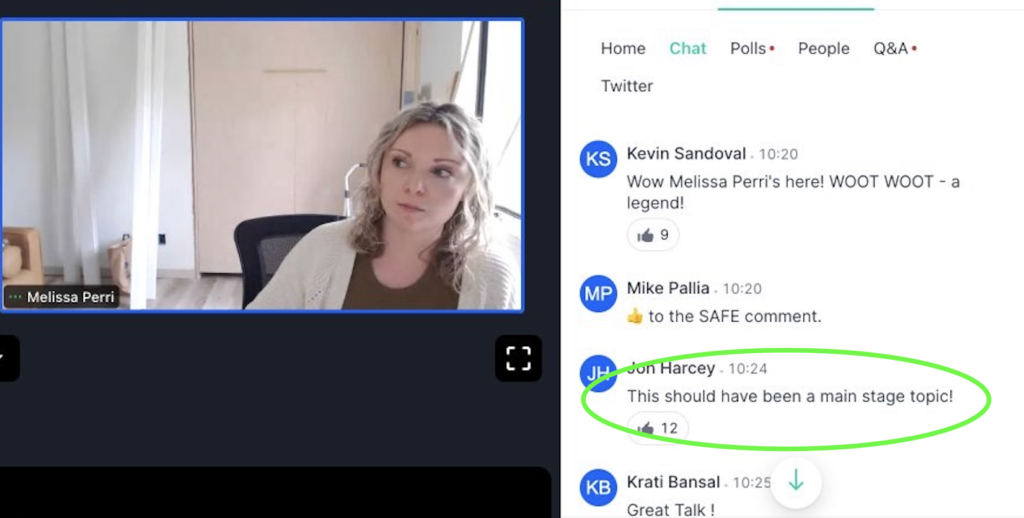
In this YouTube discussion, TJ Bonaventura and I dive into the fascinating world of content marketing and how AI is reshaping the landscape.
Watch this video in which we explore:
The evolving trend of B2B organizations using creators, particularly executives, to amplify their brand’s voice on platforms like LinkedIn.
The importance of authenticity and thought leadership in executive branding and share insights on maintaining a consistent content cadence without overwhelming creators.
The power of building communities and how B2B companies can create meaningful spaces for their target audience.
The potential of AI tools like ChatGPT and Jasper in streamlining content creation, saving time on research, and enhancing content quality.
Does your marketing team create content in a one-off, ad-hoc way and want to move to a more structured approach?
In this article, I’ll share how you could build a simple content strategy with a regular cadence.
It will cover everything from what type of content to prioritize, the frequency of delivery, and the KPIs you would want to track.
You can build your content machine based on this strategy and once it hums (generates positive ROI), pour some gas on it.
Scale baby, scale!
Why should you trust this plan? Two reasons:
1 – It’s inspired by the best practices from content marketing guru, Emilia Korczyńska, Head of Marketing at UserPilot. With her content strategy and ops framework, she helped the SaaS startup go from writing 4 blogs per month to 40 while 10X-ing monthly traffic, leading to incredible revenue growth.
2 – The plan includes actual tactics and strategies the team and I implemented at Dragonboat.io, which helped to increase organic website traffic by 146% and MQLs by 281% YoY.
This is a snippet of my article that originally appeared on theecommmanager.com:
If you’re looking to stir up some attention for your business, a solid demand generation strategy will help you build an audience and generate excitement around your brand.
If someone walked up to you on the street and suddenly shouted at you, “Hey! Buy my magical supplement. It cures all!” You would probably say, “I don’t believe you. Leave me alone!” That’s also true for new B2B ecommerce brands with pushy ad tactics. You must build a relationship based on trust and establish authority in your niche.
Demand generation is a critical component to your B2B ecommerce brand’s success amidst growing competition and lower barriers to entering the market. On top of that, with the explosion of new channels to transmit a marketing message, it becomes vital to get strategic with your sales and marketing efforts. A comprehensive demand generation strategy will help to position your brand, establish authority, and generate more leads without throwing money down the drain.
As a B2B and startup marketer who has managed several demand generation programs, I will share proven strategies and tactics you can use to build a winning demand gen strategy.
What Is Demand Generation?
Demand generation is the linchpin of B2B ecommerce brand’s marketing strategy because it focuses on building a scalable engine that creates reliable awareness and interest amongst your audience, resulting in a sales funnel with high-quality leads.
Demand gen can make a brand’s marketing messages sound more authoritative and carry more weight with its target market, and ultimately help increase the bottom line by cultivating strong leads that turn into new customers.
Demand gen aims to provide sales with more warm and qualified leads than leads derived from traditional inbound marketing tactics. Demand gen is vital for B2B companies that sell sophisticated or highly technical products with a longer sales cycle because you need to establish credibility. Why should your prospect invest in you over a competitor?
When done right, demand gen aligns sales and marketing teams to build demand for a product/service and clarifies how to do it for every step of the buyer journey.
Demand Generation Vs. Lead Generation: What’s The Difference?
Lead generation
Lead generation is a marketing activity that focuses on turning members of an engaged audience into leads. A lead is someone who has an interest in your brand’s products and services. Leads can be categorized as either “marketing qualified leads” or “sales qualified leads” based on how well they fit the criteria for a qualified buyer and their likelihood to enter a sales deal.
For example, lead generation occurs when a business development representative (BDR) sends a personalized follow-up email to a prospect who recently attended a webinar, offering a free trial. If they accept the free trial, they may be categorized as a marketing-qualified lead and be passed on to sales, who will try to convert the lead into a paid customer.
Demand generation
Demand generation, on the other hand, encompasses not only lead generation but also the entire content strategy and activities needed to build an audience within your demographic and total addressable market (TAM). It involves creating a data-driven marketing funnel and optimizing it over time to engage new leads.
Demand gen requires heavy collaboration and communication between sales and marketing departments. It starts earlier in the buyer’s journey than lead gen because it helps to create awareness about:
The problem you solve.
How you solve it.
Why buyers should trust/choose you.
Why Do New Brands Need A Demand Generation Strategy?
Meet buyers where they are in their journey
A decade or two ago, B2B buyers had far fewer sources of information when it came down to purchasing products online. Thanks to search engines like Google and communities like Reddit, key information has been democratized and decentralized. Whereas companies used to rely on industry analysts like Gartner and Forrester to share their in-depth reports, buyers can now engage directly with other buyers and customers.
Due to the increased streams of information available, the buyer journey is a lot more complicated these days. Marketing teams need to think long-term to orchestrate plays that produce high-quality leads across dozens of touchpoints using the right call-to-action at the right time.
Increase brand awareness
Top-of-funnel awareness is critical to building your brand over time. Think back to the Marketing Rule of 7, which says that a message needs to be heard at least seven times to be effective. The more times someone comes across your brand, the more likely they are to think back to it when facing a problem you can solve.
Demand gen puts systems in place to keep your brand in front of your audience and nurture prospective buyers.
Build relationships and trust
A key element of demand generation is establishing authority and credibility in your space. Target buyers will trust you more when you provide value for free, align your brand with topical experts, and showcase customer success stories. This is because you can show what you know and are capable of instead of just telling.
The more consistently you drive these marketing components into your demand gen strategy, the greater the trust will be.
Generate more leads and revenue
Building awareness, capturing and nurturing leads, and prompting engagement through a deliberate demand generation strategy is essential to driving revenue. A robust demand generation strategy will help you bring in reliable, high-quality leads and grow your business.
You’ll reduce wasted marketing spend, increase lead quality, and consistently hit your quotas.
Reduce customer churn
Retaining customers is far more profitable than replacing them. Demand generation helps to better educate prospective buyers about your product, so they are more informed and likely to make the right choice at checkout. Since they are more confident of your product’s ability to deliver, the likelihood of churning is lower.
Laying The Foundation For Your Demand Generation Strategy
Now that we’ve established what demand generation is and why it’s essential for B2B ecommerce brands, we need to cover the foundation for your strategy before diving in.
There are three things (minimum) you need to take care of before building your demand generation strategy: positioning, success metrics, and tools and processes.
Positioning
Hopefully, before you even started to market your product or service, your team put a lot of thought and energy into positioning your product in the market. A positioning statement should be a sentence or two that clearly defines the problem you’re solving, for who, and why your solution is compelling.
Here is a real-world example of Harley Davidson’s positioning statement:
“The only motorcycle manufacturer that makes big, loud motorcycles for macho guys (and “macho wannabes”) mostly in the United States who want to join a gang of cowboys in an era of decreasing personal freedom.”
Positioning work is essential to ALL marketing because it provides guidelines for building your brand and crafting your messaging. It’s the stake you claim and your brand’s point of view.
Plan how to measure success
Fortunately, demand generation is not as nebulous as branding. It can often be measured quantitatively.
Start by asking yourself, “What’s the main objective of our demand gen efforts?”
Do you want to pump out leads? Well, first of all, how do you define a lead? What is a conversion event to you?
Once you’ve answered those questions, determine how you’ll measure your demand generation strategy’s effectiveness. You might decide on KPIs or metrics like cost per lead (CPL), deal close rate, funnel conversion rates, time to close (TTC), average contract value (ACV), etc.
Configure tools and processes
Demand generation aims to build a sales pipeline by capturing demand and converting leads. You will need to have a website that is capable of both! For example, ensure you set up your pricing page with the ability to buy now or book a demo. To capture demand, you should also have a newsletter subscription form in your website footer to nurture those who are interested but not yet ready to buy.
You’ll need the right tools to capture email subscribers, run lead nurturing programs, and facilitate sales. Use the right ecommerce customer relationship management (CRM) software with email automation capabilities to engage with your subscribers and leads.
Whether you run a small business or a large ecommerce operation, having an online lead management process is critical to building sustainable growth.
For ecommerce brands, leads are the virtual version of shoppers browsing through a brick-and-mortar store. They need to come across your display window (an ad, email, or post on social media), walk into your store (enter your website), browse the aisles (check out the sales pages), and either do a self-checkout or buy through a salesperson.
It’s imperative to have a systematic way to attract customers to your website and capture their interest.
I’ve helped B2B e-commerce companies generate thousands of leads and convert them into customers.
In this article, I’ll explain the basics of online lead management, how to implement it, what strategies are needed to energize your lead generation efforts, and the tools you’ll need to get started.
While Zoom burnout is a real thing, webinars in the B2B world aren’t going anywhere anytime soon.
That’s because a webinar can be one of a marketer’s best channels for educating the market and generating new leads. And, people are still signing up for them!
In just a half-hour session, companies can deliver incredible value to their target audience by presenting key information that empowers them to solve a specific problem.
The benefits of hosting webinars, even in 2022, are many:
Directly communicate with customers with live Q&A, gaining insights into their challenges, concerns about your product, and so on.
Create meaningful connections with prospective buyers and nurture existing relationships by creating a forum where they can engage you.
Repurpose the webinar to easily produce new forms of content like ebooks, blog posts, social media videos, and podcast episodes.
Motivate attendees to try your product during the exact moment when you have their full attention!
Don’t have an advertising budget to promote your next webinar?
Luckily, there are several ways to spread the word about your webinar organically and max out that registration list!
Let’s take a look.
1. Add a blurb to your corporate email signature
Think about how many times a day your fellow employees send emails externally, especially on the sales team! Then, imagine how many times each one of those emails gets opened or forwarded!
What’s great about adding a little promotional blurb to your company’s email signature is that it doesn’t have to take up much space, but is sure to catch attention. Even better, you can add a small giph or graphic to encourage more clicks.
At one of my previous workplaces, a developer created a tool that allowed us to roll out dynamic content to our corporate Gmail signature.
Thanks to tracking via UTM parameters, we found this trick alone helped to increase our webinar registration on average by 20%.
2. Write an opinionated Linkedin post
Have you ever seen those bold claim Linkedin statuses? They usually have a hook; a controversial opinion, provocative question, or an absurd story.
After the first two lines, you want to know where the author is going with their point, so you click ‘Read more.”
Here is an example:
The secret is to not start the status by saying something like, “Hey, I’m doing a webinar on XYZ!”
Because no one cares.
Instead, spark some interest in your topic by sharing a surprising key insight or uncommon viewpoint, then invite everyone to the webinar to continue the conversation.
3. Promote within relevant Linkedin groups
There is a Linkedin group for just about everything. If your webinar is about using AI-driven recruitment methods, find Linkedin groups dedicated to Human Resources, People Ops, DEI, etc. and share the link to your webinar sign-up page there.
TIP: Pick the groups with the most members and that get a lot of activity. You’ll have to request to join, so keep a lookout for the notification that you’re in and then post away!
4. Send 1–1 emails to key contacts
If you have important contacts you keep in touch with, such as old clients or partners who aren’t already on your email marketing list, send them a quick note with the link to sign-up! In addition to having them join the webinar, it’s a great way to get them to opt-in to your email list.
5. Add a banner to your website
Your website is prime real estate. The good news is you can quickly add a temporary, contrasting banner at the top! Include a blurb about your webinar and a CTA button that leads to the landing page.
Here’s an example:
Intercom uses a banner to promote its fall launch event webpage.
6. Ask other brands for cross-promotion
For any company in any industry, it’s instrumental for growth to develop an ecosystem of companies that you have synergy with to cross-promote one another.
Scratch their back; they scratch yours.
7. Create a teaser video
Video content consistently outperforms text on social media and professional platforms like Linkedin. Ask your speaker(s) to share a brief clip of themselves explaining why someone should attend the webinar. That way, you leverage their network and also have a greater chance of breaking up the newsfeed!
Tristan Lombard at Provar Testing does an excellent job of this in his post:
8. Add a CTA to popular and relevant blog articles
Chances are, you have some content on your website that relates to the topic of your webinar. Look up which pages perform best in Google Analytics and then assess which of those you could update with a CTA to sign-up for your webinar.
9. Spread the word in Slack communities
Similar to #3, there are also new Slack communities cropping up every day around various professions, hobbies, and interests. You can find them with just a quick Google Search. Make sure to spend some time learning the etiquette within each community before you write your first post. Remember, try to add value to the group instead of coming off too salesy!
10. Promote the webinar inside your product
Last but not least, if possible, create an in-app message to promote your webinar to your customers! You can do this without having to code if you have already employ a tool like Drift, Intercom, Pendo, etc.
There ya have it…
Off the top of my mind, these are 10 effective ways to increase webinar leads with zero ad spend.
Are you getting ready to host a virtual summit or conference? Or even sponsor one?
Maybe, if you’re like me, you wear multiple hats and this is the first time your marketing team has tested this channel.
Good news: when it comes to virtual vs. in-person events, there’s less to coordinate! No need to worry about renting monitors, designing custom t-shirts, picking up name badges, etc.
Fewer moving pieces = fewer points of failure!
However, don’t be fooled…
There’s still a litany of tasks you’ll need to accomplish to get the most out of your event investment! If you don’t take care of critical tasks like developing a rock-solid promotion strategy, you’ll leave ROI on the table.
In this post, I’ll share a list of the essentials that every marketer should plan to coordinate before and after their virtual event.
First, a little context. At Dragonboat.io, we teamed up with Product School at ProductCon to create a conference within a conference. What do I mean by that?
Equipped with streaming capabilities, we used our virtual expo booth within the conference platform (Hopin) to host our own sessions throughout the day.
Given this incredible opportunity, we went all-out to develop a jam-packed agenda (out of the 10 other sponsors, we were the only ones that did):
Creating our booth’s mini-conference, involving having our CEO on stage alongside industry thought leaders like Melissa Perri, was a great strategy. We leveraged the built-in audience from ProductCon, drawing thousands of visitors and engaging them with premium content. Meanwhile, the other sponsored booths simply played pre-recorded demo videos, tended by salespeople.
Could you imagine which booth was the favorite?!
While the event was a success, it was no easy feat to pull off as a small marketing team on a tight timeline. Although fewer logistics were involved than a physical conference, there were still many things to keep in mind. And as we went, we realized that there was even more to it than we thought!
For example, we wanted to create our own event sign-up page so people could register for our sessions inside ProductCon (which was a free event). When someone registered for our sessions, we sent them Calendar invites and also registered them for the ProductCon main event.
As we started to promote our event page, we realized that it would benefit us to make individual session registration pages. This way, our guest speakers would be encouraged to share them on social media.
This is when the work starts to add up (aka scope creep) when you didn’t plan for it ahead of time!
We created five more landing pages… that’s five more forms, meta images and descriptions, body copies, Hubspot automations, etc. You get the point! When you work with a global team, time zone differences on a time crunch make this challenging.
So, here is a “quick and dirty” list, based on my experience, of what you’ll need to plan ahead for your virtual event to squeeze the most out of it.
Feel free to copy and paste the list into a Google doc or load it up in Asana! The list is in order of what you’ll need to complete first. Depending on how much time you have to plan your event, you will want to work backward!
A Marketer’s Checklist for Planning a Virtual Summit or Event
Graphic Design and Web Development Needs:
The overall look and feel/branding for the event
Generic event graphic template
Landing page design and template in WordPress
Meta image for the landing page (this will appear when someone shares the link on social media)
Graphic showing the event line-up/agenda in appropriate sizes for social media and an email campaign
Banner graphic for the email announcement
Individual sign-up pages for high-value sessions
Social media-ready promotional graphics for each individual session
Slide deck template that matches the event branding
Booth background/splash image
Graphic to promote potential giveaways and prizes
Booth thumbnail image for the virtual expo hall
Banner for the website home page to direct traffic to the event sign-up page
Logistical Planning:
Team Brainstorm: target audience, event name, session topics, networking approaches, SDR tactics, prizes, polls, promotional strategy, etc.
Create a rough event agenda
Write landing page copy and define the structure
Invite and lock in guest speakers
Finalize the speaker lineup and schedule
Send Calendar invites to all of the speakers
Set up times to brainstorm and/or pre-record sessions as needed with speakers
Write short descriptions or an abstract for each session
Publish the sign-up page to your website
Create session sign-up confirmation emails and Hubspot workflows
Create a social media promotion plan
Sign up the speakers and employees to be webinar panelists/booth hosts
Prep & train internal people who will be leading sessions
Prepare slide deck/ resources for each session
Determine prize(s) and raffle rules
Purchase prize items
Customize and set up the virtual booth
Test booth functionality
Determine which helpers will be needed on the day of to do what and assign the roles
Plan for how to record the sessions
Make a plan/timeline for the day of the event and schedule different shifts
Create polls to launch for the audience during each session
Promotional Activities:
Send a promotional email to leads, advisors/investors, customers, and partners
Share the landing page for the event with online communities
Share several times on social media!!
Write sharing messages for guest speakers and ask them to post
Record a short teaser video to post on social media
Publish a promotional banner on the website
Add the event landing page to the company email signature
Write sample posts for employees to share on their social media accounts
Send a reminder email to people who registered one day and one hour in advance
Follow-Up Tasks:
Send thank you emails to guest speakers
Send a thank you email to all other collaborators
Create session recordings and upload them to Youtube
Update the event page to reflect that it’s over and offer access to the session recordings
Send a follow-up email campaign to all who registered with links to the recordings
Create video clips of the best “nuggets” from each recording
Publish an overall event recap article
Obtain transcripts of each session
Develop a content calendar based on the raw transcript material
Help the SDR team target leads from the event
Add engaged booth visitors on Linkedin
Follow up with audience questions that were left unanswered
Conduct an ROI analysis
Host a retrospective with your team to uncover what went well and what to improve upon next time
What do you think? Did I miss something? Leave a comment!
This Thanksgiving, I wanted to put pen to paper about my feelings of gratitude for my job.
Among other things, it is something I am profoundly grateful for and I often find myself thinking about how lucky I am to work for the company that I do.
But, honestly, it’s pretty hard to put it into words. I only hope that this post can do my gratitude some justice.
13 Reasons Why I Love Working for My Company
1) I can say for certain that my colleagues and bosses care more about me as a person than what I can do for their pockets or their agendas.
2) I’m free to work from anywhere. (Yes, in the world… well, in a close time zone, that is.) Without having to take a vacation, I’ve already been to Colombia, Ecuador, Peru, Portugal, Spain, Italy, Argentina… and the list goes on. My next new destination is Brazil!
3) Uruguay is a tiny miracle of a place. Prosperous and liberal, it has low corruption by regional standards and its politics are temperate. Uruguayans enjoy the highest quality of life on the continent. It’s a country whose human warmth is unparalleled and whose barbecue, better known as asado, reigns supreme.
4) Our “People Care” team has real systems in place to support both personal and professional growth for every team member.
5) Our leaders don’t believe in quitting or failure. Their resilience and confidence inspire me every day.
6) It’s extremely rare for someone inside Abstracta to be let go. We try really hard to find a place for someone in our company once they’re in it, even if that implies shifting their role to something we think they may be better suited for. We try to help people find their path to success.
7) I am granted a lot of autonomy.
8) I am given mentorship and support whenever I ask for it.
9) The opportunities for our business are endless! Every software needs quality assurance or what we like to call “quality engineering” and no, it can’t all be automated.
10) Unlike the unicorns, my company was built off bootstrapping and prioritizes sustainability. It took over ten years to reach +100 employees. I’m excited to see where we will be in five more years.
11) Abstracta creates innovative, win-win strategies that enable it to grow while also giving back to the community. For example, Abstracta gets involved with programs that train various groups of people in testing who would not have had the opportunity to break into tech and improve their lives otherwise. These programs, in turn, also help us to recruit and hire more desperately needed talent in our industry.
12) I have learned a better way to work with my team this year, thanks to the help of my colleagues, which has really helped to boost my confidence, keep us all aligned, and enabled me to be more proud of our achievements.
13) Last but not least, Uruguayan company celebrations > other country company celebrations.
Tour companies want you to think it’s complicated to visit Machu Picchu. Here’s the simplest way to day trip it.
…
I just finished up a lovely 5 week trip to Lima and Cusco, Peru, working remotely in both cities and exploring in my free time.
Months before my trip, I had started researching how to go to Machu Picchu. All of the blogs and websites I’d found made it seem SO complicated! I’m not a great travel planner as I don’t have the patience to do extensive research.
And, there are indeed a million different ways you can design your Machu Picchu experience.
You can trek for anywhere from a couple of hours to five days to get there or spend the night at the base of Machu Picchu and go up the mountain from there early in the morning.
OR you can stay in a very small town an hour or so away.
OR you can just do it all in one day from the major tourist destination, Cusco, which is about a three hour journey each way.
With limited time to enjoy Cusco, I ruled out the trekking options. To make things simple, I figured I’d just go from Cusco early morning and come back at night.
Here are the basics of what you need to know…
1. Start in Cusco, Peru
Cusco, Peru is the closest city with an airport to Machu Picchu.
It’s an absolutely beautiful colonial town—hilly, but walkable. There are tons of little hotels and AirBnB’s. I recommend getting a hotel room, the AirBnB selection (at least what was available last minute) was not very impressive and they have fairly economical boutique hotels right in the center.
At 11,000 feet, the elevation may make you feel terrible during your first 24 hours here. You can either stay in town and acclimate for a few days, or go to Machu Picchu right away, because the altitude is lower there.
For just $10, you too can get a picture like this 😉
Cusco’s main square, the Plaza de Armas
2. Buy Tickets
There are only two tickets you need to buy in advance: the entrance ticket to Machu Picchu and your transportation to Aguas Calientes, which lies at the base of Machu Picchu.
First, go to this website and see what the ticket availability is to go to Machu Picchu (don’t buy yet) on your desired date. They only allow a set amount of visitors per day. In my case, I went right after Easter and I was able to buy my ticket two days in advance. Sometimes you can get it the day of, but it could also be fully booked.
Next, check the train schedules and ticket availability on PeruRail.com. There are trains from Cusco that go all the way to Aguas Calientes and back, with varying degrees of luxury. The most basic train and “mid-level nice” train are both great, with little difference between the two.
Depending on the time of year, you may be sold a bus/train combo ticket, because a good part of the train tracks are too muddy for part of the year. Either way, it’s just one ticket.
If you see there is availability for both the train and the entrance to Machu Picchu, then book them!
**Make sure to give yourself a good 6 hour window between the time your train arrives in Aguas Calientes and when you take the train back to Cusco.
**Also, after you buy your Peru Rail ticket online, you need to visit one of their physical locations in Cusco to have them print it out. (Sigh, but it was right in the center, where you probably will be anyway.)
3. Getting All the Way There
Due to the time of year, I was sold a bus ticket from Cusco to the train station in Ollantaytambo which continues on to Aguas Calientes. To get to the bus, I simply walked from my hotel. It took 15 minutes, and the bus left at 6:50 am.
Beautiful views from the Vistadome train on the way back to Cusco.
When you arrive to Aguas Calientes, follow the hoards of people to the shuttle ticket booth. You will have to buy a shuttle ride up and down the mountain for $12 each way.
Once you have the shuttle tickets, get in line to get on the shuttle and you will be at Machu Picchu in 20 minutes!
I entered without a guide or tour group and saw someone else get off the shuttle who was also going solo. I turned to him and said, “You ready? Let’s do this!”
And so, I made a friend while walking through the glorious ruins of Machu Picchu!
My new travel bud for the day.
New four legged friends too!
General Things to Know
If you are day tripping and not trekking, you can wear whatever you want. I wore a t-shirt, jeans, a jacket and comfortable shoes.
It will be a long day, so just be prepared! Bring snacks if you want but you can also buy them along the way. It’s also a good idea to bring sunscreen, maybe sunglasses, and of course… your camera!
**They don’t allow you to bring disposable water bottles into the site, so make sure to bring a reusable water bottle. I was dying of thirst by the time I was almost done walking through it.
You have four hours from the time you enter the site until you have to leave it. Two hours was enough for me!
The line for the shuttle back down took almost an hour! But, once we got back to Aguas Calientes, we had time for lunch and shopping before taking the train home.
Now, you may be thinking I missed out by not having a guide. I could hear bits and pieces of other tours, but honestly not a whole lot is known about the history of the site. It was only discovered about 50 years ago by an American explorer! Fortunately, I am reading a book about it now, “Turn Right at Machu Picchu” by Mark Adams, which is far more interesting than listening to a tour guide!
There you have it, the easy way to do Machu Picchu (and it just so happens to give you an extra hour of sleep in the morning and cost you $100 less than booking a day trip through a tour company)!
A checklist for everything to have, research and do when going to a new destination
It’s been almost a year and a half since my post about starting a nomadic lifestyle! During this time, I have been to Uruguay, Argentina, Colombia, NYC, back home to California, then to Mexico, Ecuador and Peru! Working while traveling isn’t easy and it’s not a vacation, no matter how glamorous it may look from the outside. But I must say, the weekends are pretty darn exciting!
Sunset views of Guanajuato, Mexico
One of the challenges of being a digital nomad is all of the work that goes into moving around. It’s worse if you’re moving through places quickly because you will have to figure out all the logistics more often. Information overload sets in when you think of going to a new place you know nothing about, making it hard to know where to even start.
This is my own “new city checklist” that has been living just in my head until now.
I categorized all the planning work into chunks and tried to estimate how long it would take to get through it all. It turns out it can take up to a full workday to do all the research you need to do (or eventually will do) about a new place in order to maximize your time there!
For me, to avoid any struggle, it’s best to nail most of this down quickly in order to have the smoothest transition and the best, most enjoyable experience right away. Everything here I include because I had a time when I needed to have it or do it and I truly wanted to remember it as a tip for the next time I started traveling. Nothing is arbitrary or “just in case”!
So, here it is!
Must Haves to Bring with You
These are the things I felt were best to record or else I’d forget them. (While of course, things like socks and undies are necessary, when it comes to remembering those, my years of packing skills have never failed me.) 😉
– Passport & ID
– Photocopies of passport
– Two or more debit cards (You do not want to lose your only debit card!)
– Multiple VISA credit cards (Amex just won’t fly in South America)
– Durable phone case (True story: phones without cases love to slip out of purses and get left behind in taxis and hotel rooms)
Things to Research Before Arrival
Basic Info (1 Hour)
A lot of the information I want to know in the beginning is also to help me decide if the city I have in mind is worth going to:
– Do I need a visa?
– How long can I stay?
– Do I need any vaccines?
– Do I need proof of onward travel?
– Is it a favorable place for working remotely?
– Have other travelers shared their reviews for working remotely there?
– Would I like the weather?
– How safe is it? What about for female travelers? Check the US travel warnings.
– What is the currency situation? Is it easy to get cash? Is it a cash or card first society?
– What are the typical tourist scams to be aware of?
– Is it nearby other destinations I want to visit?
– What are some of the things the city/country is most known for?
Accommodation (1 – 2 Hours)
Sometimes the longest part, it’s good to give yourself a few days to find housing, or you can book a hotel room for a few days while you look for a room to rent or something more suitable for the long-term.
– What is the best option for finding a place to stay? (Airbnb, Facebook groups, Craigslist, Hostelworld, Booking.com?)
– Do I want my own place or shared?
– Would I want a private room in a hostel? A private room in a shared Airbnb?
– Is there a lot of foreign exchange and expat housing resources online?
– What is the best neighborhood to live and work in?
– Is there a Selina? (A new hostel chain for digital nomads that offers co-working memberships)
The view from my AirBnB in Medellín, Colombia
Transportation (20 Minutes)
Some cities are super well known for their amazing public transportation infrastructure. Others are not. It’s important to make sure the place you are going has options that you feel comfortable using. Here are some considerations:
– How will I get to my destination (bus, plane, train)?
– Does Uber exist there?
– Are taxis reliable and safe?
– Plan how to get from the airport to my accommodation
Get Connected (0.5 – 1 Hour)
When traveling solo, I like to have a plan in place for making friends, and quick! I don’t really want to spend more than a few days not knowing anyone. Here are some ways I’ve brainstormed to find a sense of community fast:
– Meetups
– Local, student, and expat related Facebook groups
– Language exchanges (See if there is a Mundo Lingo chapter or nearby language schools!)
– Couchsurfing events and hangouts
To Find and Save in Google Maps (0.5 – 2 Hours)
Now here is where I might lose some people, but… you will be looking for these things eventually! Might as well do it all in one go?
– Home address
– Co-works to visit
– Close restaurants to home
– Close restaurants to my co-work
– Natural food stores (Great places for gluten-free groceries)
– Good coffee shops
– Famous bars and restaurants
– Shopping mall
– Cell phone carrier store
– Best gym close to home
Fun Things To Do (1 – 2 Hours)
To make the most out of your free time, it’s good to know what is going on and what is worthwhile to do. Write a huge list of “Must-do’s” and “Want to do’s” and see how many you can cross off and when you can possibly fit them in your calendar:
– Free walking tour
– Local attractions
– Upcoming events on Facebook (Especially concerts!)
– Local holidays and festivities
– Side trips
– Different types of classes
– Local artisan markets
– Save relevant articles about the city on Culture Trip!
To Do Immediately After Arrival
From my experience, I’ve learned it’s better to arrive on a weekend as moving during the middle of the workweek is a hassle. Before getting into the next week, it’s a good idea to do these things as soon as possible:
– Get cash at an ATM
– Visit the grocery store, stock up on water, snacks and any toiletries needed
– Get a new cell phone chip so you have data while out and about (This is also fundamentally important for your safety, being able to message a friend or call an uber to get home safe.)
– Join the Nomad List Slack channel for the city and ask who is around
– Do something right away to meet people like a free walking tour
– Have a plan for where to work from on Monday by scouting out coffee shops and co-works
– Keep an eye out for anywhere you can do your laundry
Final Thoughts
If you’re considering working and traveling, especially solo, you may be thinking that it’s a lot of work to move! Well, for me, it is. For example, some people can survive eating see food (any food they see), but for me, being both picky and gluten-free adds some complexity and requires some more preparation!
But, you don’t have to go it alone!
Fortunately, this year, I joined WiFi Tribe and have traveled with them to Ecuador and Peru which has made things so much easier. First of all, the program finds shared housing for you in each new destination and connects you with about 20 other travelers. Having a good group to count on is invaluable, even for little things. For example, if you’re out with the group and run out of cash, someone else can spot you. You can also split costs for taxis and take private transfers together which is great for your budget and keeps you safe!
When it comes to planning your free time and weekend trips, there is always someone who is willing to take the lead or delegate, so the group can accomplish much more than just one person.
Thanks to traveling with a group, I’ve gone to so many more places than I would have if I were left to my own devices like the Ecuadorian Amazon and Huacachina, a desert oasis in Peru.
A weekend trip to the outskirts of the Amazon, only possible for me thanks to the help of the “Tribers” for planning it!
What is your take? Am I over-preparing or am I missing something on my checklist? Let me know!